AI Software


LLM integration, RAG systems, AI chatbots, ML-powered apps, and generative AI products. Built end-to-end for clients across the USA, Australia, Europe, and the Middle East.
Trusted by innovators worldwide









Global AI software market by 2030
Years delivering AI-powered products
Live AI products shipped
Not every problem needs AI. Some need a cleaner database query. But when the problem involves language, patterns, predictions, or content at scale — AI is often the right tool, and the gap between using it well and using it badly is significant.
AI software development means building applications that learn, reason, or generate rather than just execute fixed instructions. In practice, that covers a wide range: an LLM that answers customer questions using your own documentation, an ML model that predicts which orders will be returned, a generative AI pipeline that writes first-draft content from a brief, or a chatbot that handles tier-1 support without a human in the loop.
What separates a well-built AI product from a poorly-built one is not the model — most teams use the same foundation models. It is the architecture around it: how data gets in, how outputs get validated, how the system behaves when the AI is wrong, and whether the whole thing is maintainable six months after launch.


We build the mobile app, web frontend, backend, database, and deployment infrastructure alongside the AI component. One team owns the whole product — not three vendors trying to integrate at the edges.

LLM outputs need validation. RAG systems need retrieval tuning. Costs need monitoring. We design AI systems for the messy reality of live traffic, not the clean conditions of a demo environment.

Our India-based team delivers to the standards expected by US, Australian, and European clients — structured sprints, regular demos, documented handoffs — at 40–60% below comparable onshore agencies.

AI products drift. Models update, data distributions shift, usage patterns change. We monitor and iterate after launch rather than disappearing once the initial build is deployed.
We start from the business problem, not the technology. Sometimes RAG is the answer. Sometimes fine-tuning. Sometimes a simpler classification model. We recommend what actually fits.
We have shipped AI features into healthcare platforms, e-commerce personalization engines, fintech tools, education apps, and restaurant management systems. The domain context shapes every architecture decision.
From a single AI feature added to an existing product to a full AI-native application built from the ground up.
GPT-4o, Claude, Llama, and Gemini integrated into your product. Prompt engineering, context management, output structuring, and cost controls. So the AI behaves predictably and fits your product, not the other way around.
Retrieval-Augmented Generation systems that let your product answer questions using your own documents, knowledge base, or database. Vector search, embedding pipelines, and chunking strategies that keep answers accurate.
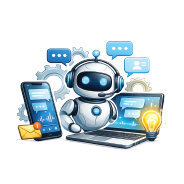
Customer-facing and internal chatbots that handle real queries. Intent classification, multi-turn conversations, fallback logic, and handoff to human agents. Deployed on web, mobile, and messaging platforms.
Custom machine learning models for classification, regression, anomaly detection, and recommendation. Fine-tuning existing LLMs on your domain data when a general model doesn't fit the task well enough.
Full-stack applications with AI features at the core — personalisation engines, predictive UX, intelligent search, content generation, and smart automation. Built in React Native, Flutter, React, or your existing stack.
Named entity recognition, sentiment analysis, text classification, summarisation, and structured data extraction from unstructured text. Useful for support ticket routing, document processing, and content analysis.
Most AI products are five layers of engineering working together. Understanding what sits where is the difference between a system that scales and one that falls apart at volume.
Each layer has to be right. A well-tuned model on a poorly designed retrieval layer gives wrong answers confidently. A great data layer with no output validation means errors reach users without a filter.
We design and build across all five layers — which is why products we deliver behave consistently in production rather than just in demos where the happy path works.

Cost monitoring (LLM API calls at scale add up), latency tracking, output quality evaluation, and incremental improvements as your data and usage patterns evolve.
We use the model and framework that fits the problem — not the one that's currently trending on Twitter.
The right AI architecture looks different in each vertical. Domain experience shapes every design decision.

Patient management AI, clinical note processing, appointment scheduling automation, and HIPAA-aware data pipelines.

Product recommendation engines, personalised search, AI-generated product descriptions, and purchase intent prediction.
Fraud detection, automated financial reporting, AI-powered document processing, and intelligent customer onboarding flows.

Personalised learning platforms, AI tutoring systems, automated assessment, and content generation for course creators.

Menu optimisation AI, demand forecasting, intelligent ordering systems, and operational efficiency tools for restaurant chains.
Property valuation models, AI-powered listing descriptions, lead scoring, and intelligent matching between buyers and properties.
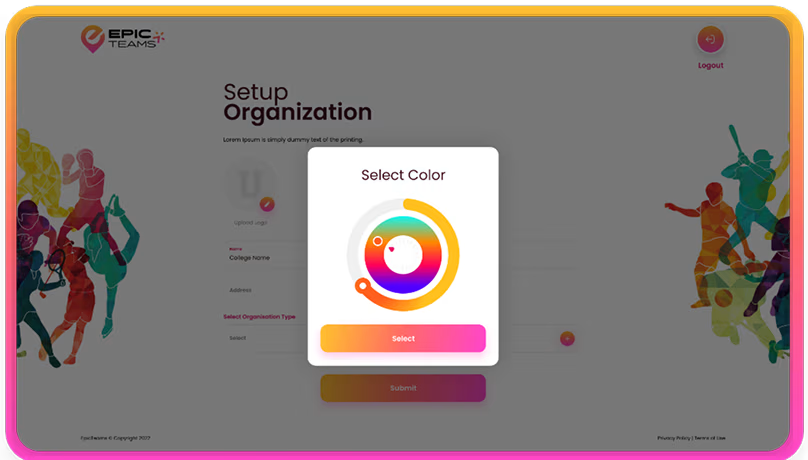
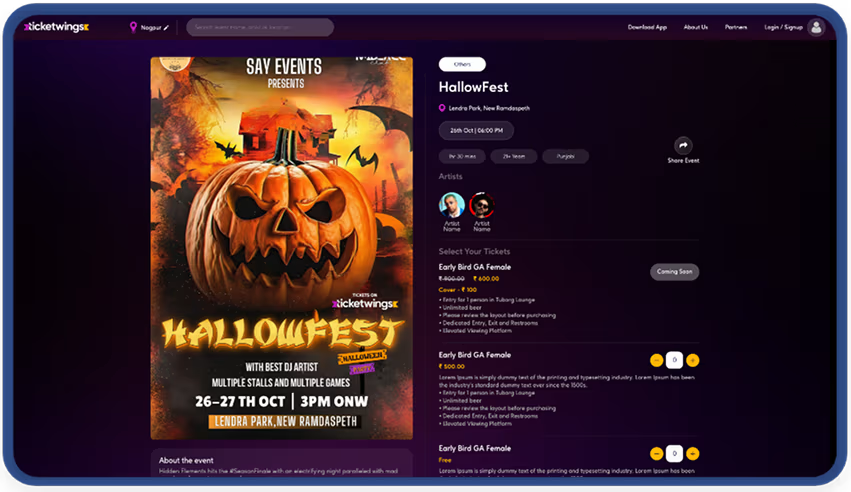
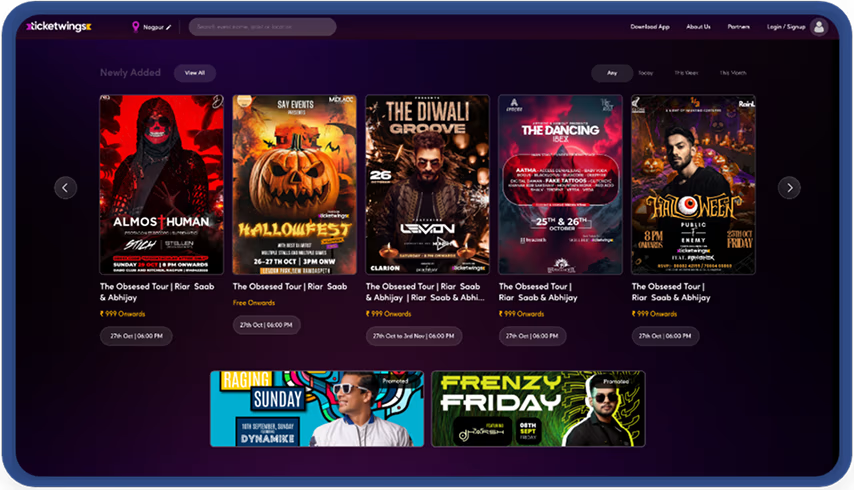
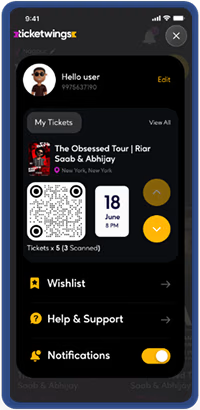
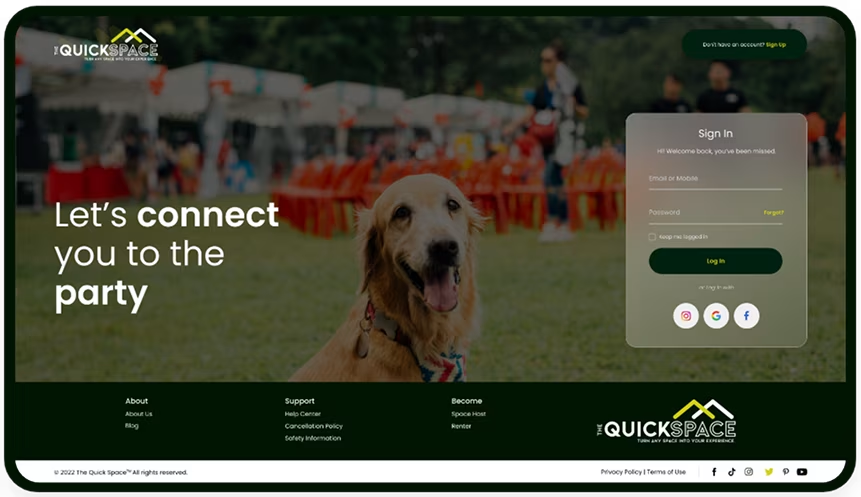
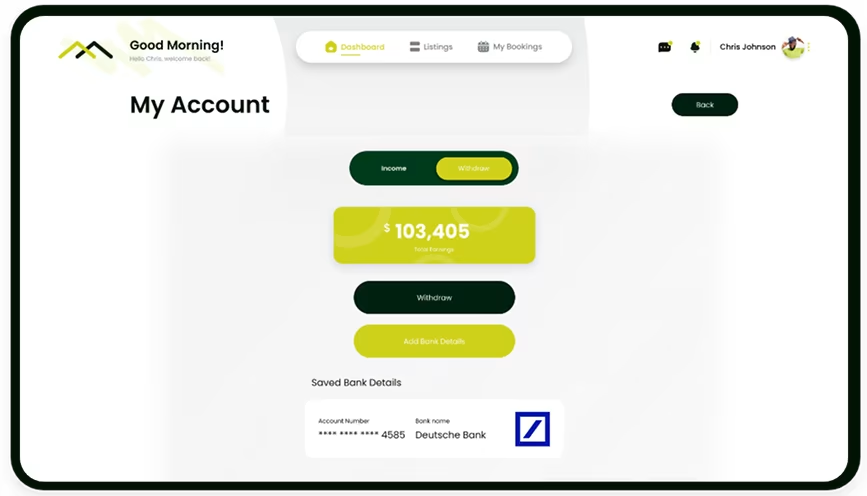
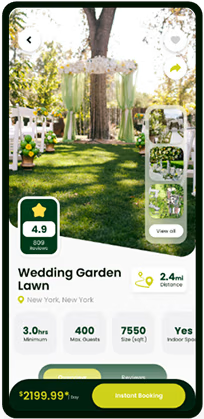

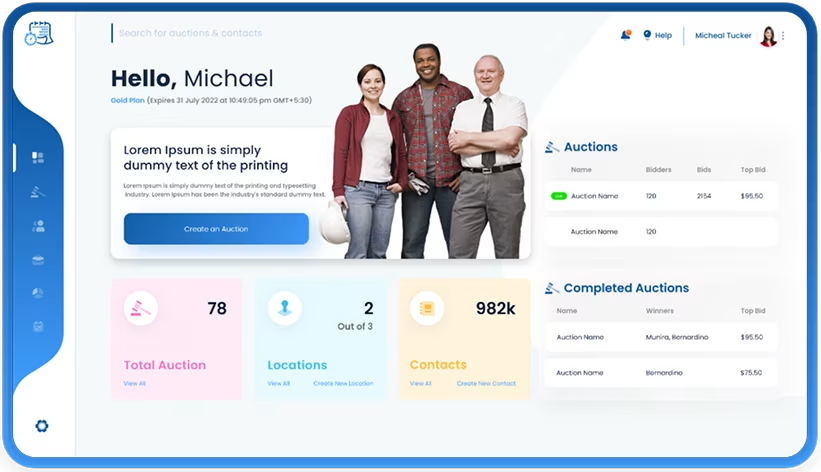
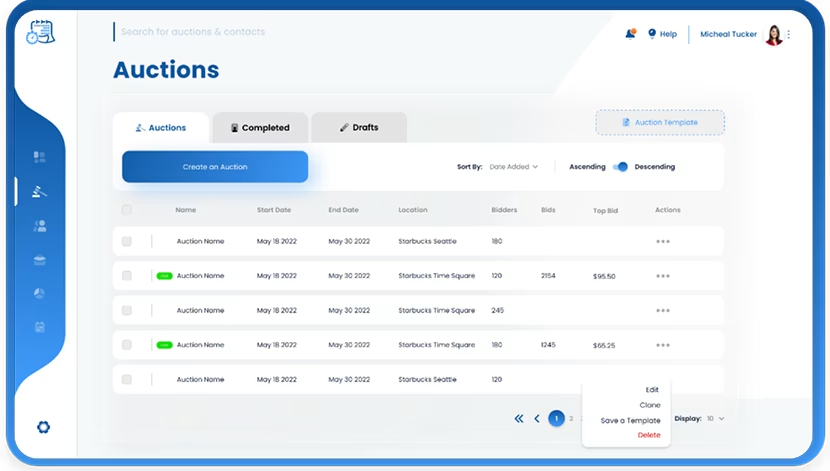
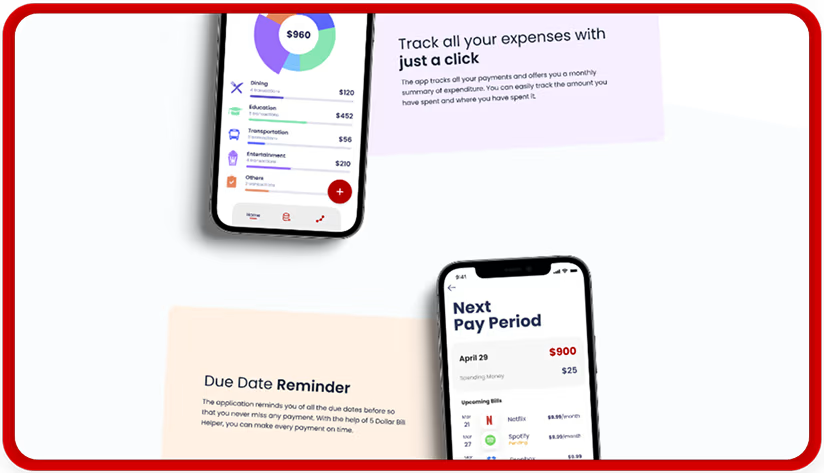




Every project is different, but these are realistic ranges for 2026 based on what we actually deliver. Webmigrates typically comes in at 40–60% below equivalent US-based agencies.
| Project Type | Typical Cost | Timeline | What's included |
|---|---|---|---|
| LLM integration into existing product | $5,000 – $20,000 | 4–8 weeks | API integration, prompt engineering, output validation, basic UI |
| AI chatbot or virtual assistant | $8,000 – $30,000 | 6–12 weeks | Intent handling, multi-turn conversation, knowledge base, deployment |
| RAG system + document intelligence | $20,000 – $60,000 | 8–14 weeks | Embedding pipeline, vector store, retrieval tuning, frontend UI |
| AI-powered mobile or web application | $35,000 – $100,000 | 3–6 months | Full-stack build, AI feature layer, backend, deployment, post-launch support |
| Custom ML model development | $25,000 – $90,000 | 2–5 months | Data prep, training, validation, API deployment, monitoring |
* Estimates based on 2026 market rates. Final scope and budget are confirmed in a no-cost discovery call before any work begins.
The questions we get asked before most AI projects start.

We're open to collaboration with you, our next adventure.
© 2026 Webmigrates Technologies LLP. All rights reserved.